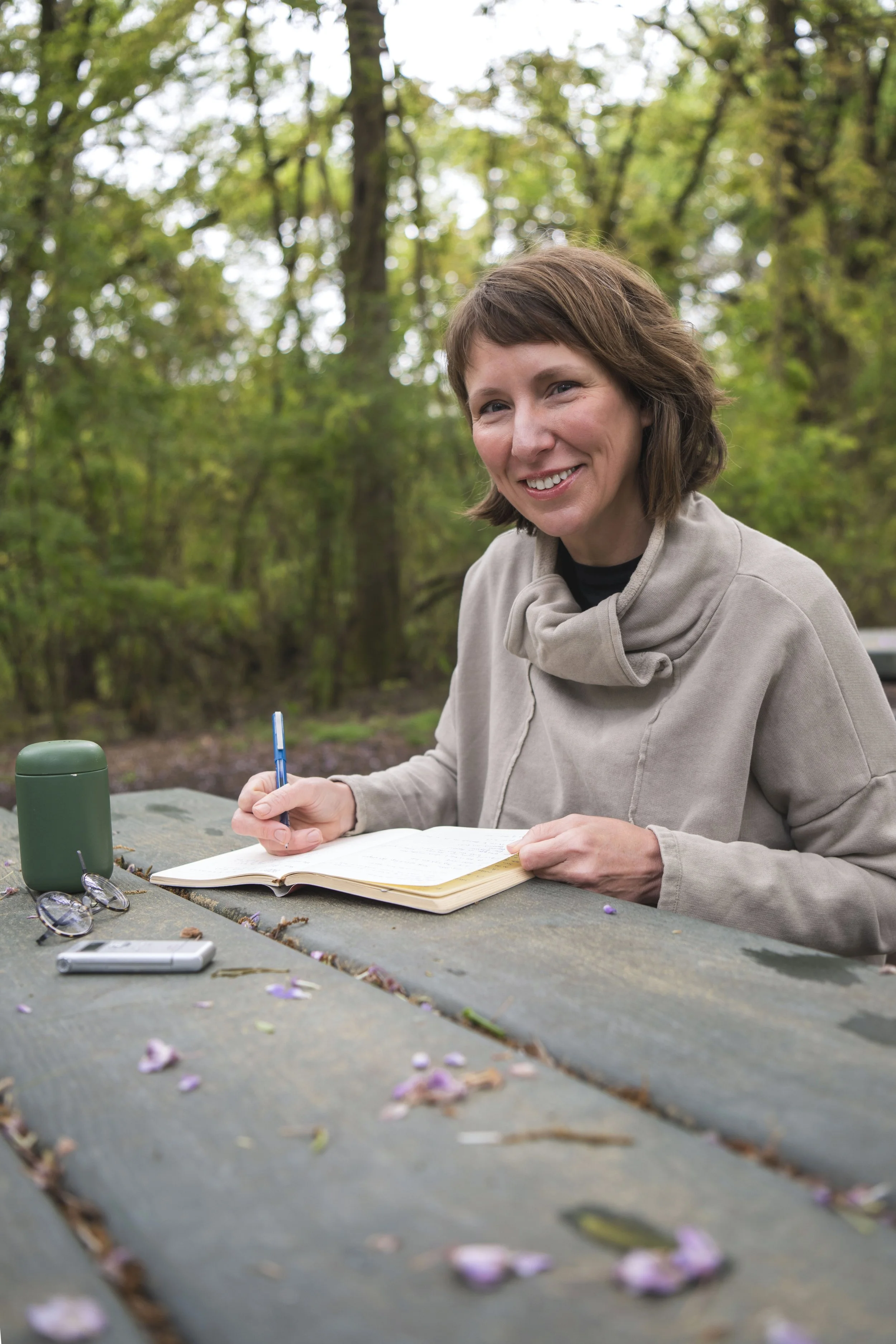
I am an Associate Professor of Sociology at the University of Mississippi, where I direct the Queer Mississippi oral histories project, teach courses on religion, race, gender, and sexuality, and mentor students as they become empathetic social scientists.
My path into sociology started with a deep curiosity about social connection, conflict, and community. Today, I channel that curiosity into using ethnography, interviews, oral histories, content analysis, and archival research to uncover the "why" behind group norms, shared attitudes, and societal harms.
My recent book, Whispers in the Pews: Evangelical Uniformity in a Divided America (NYU Press, 2026), examines how the social production of sameness reproduces broader forms of social inequality—exploring how mundane interactions enforce conformity and marginalize dissent. Through an ethnography of a multiracial evangelical Christian church in a polarized Southern college town, Whispers shows that everyday practices of silence, conflict avoidance, and small talk are just as politically powerful as right-wing rhetoric because these practices tacitly define what is acceptable to talk and think about.
Two new lines of research build upon my broader inquiry into religion, cultural power, and inequality. The first, “We’re Not Leaving: Struggles for Queer Belonging in Mississippi,” investigates how silence and silencing—as tools of both exclusion and resistance—shape queer expression and community in religiously conservative contexts. Part one uses archival research on the Mississippi-based American Family Association (AFA) to show how fundamentalist activists wage a national "culture war” on what they call “the gay agenda.” Part two draws on the Queer Mississippi archive to examine how local LGBTQ+ individuals living near the AFA navigate these attacks, demonstrating how queer connections take root, persist, and thrive in even the most aversive cultural landscapes.
The second, a multi-method project titled “What Kids Ought to Learn: Teaching Right from Wrong in a Splintered Society,” examines how parents, educators, and parental rights campaigns are redefining the meaning and purpose of K-12 education. Through semi-structured interviews, digital ethnography, and observation of town halls and homeschool workshops, this study explores how moral commitments drive knowledge resistance and skepticism toward public school curricula. By examining families who opt out of high-performing school districts, the project uncovers how race, class, and gender shape the moral frameworks that dictate what facts are accepted, what histories are rejected, and what children have a “right” to know and learn.